Existing vaccines focus on recognition of the spike protein.

Suddenly new variant with 50 CHANGES shows up. FAR outside normal deviation.

32 of them on the spike protein… meaning existing vaccine related antibodies are unlikely to recognize spike protein and block infection. This makes Omicron spread faster. But somehow it’s also more mild.

If true… this is a serious threat to Fauci & Co because everyone is about to have updated natural immunity… and that means the MSM is about to have their hands full trying to help keep excuses for lockdowns going while cases plummet worldwide…

doctor credited with alerting South African authorities about the Omicron variant of COVID-19 warned against overreacting as

2021 - Variant Omicron | The first "image" shows more ...

“The doctor credited with alerting South African authorities about the omicron variant of COVID-19 warned against overreacting as medical experts advise to prepare for the worst and countries including the United States implement new travel restrictions to stem its spread. “

https://www.washingtonexaminer.com/news/doctor-who-raised-alarm-about-omicron-covid-19-variant-says-no-reason-to-panic

Pfizer and Moderna mRNA COVID-19 vaccines; dramatically increase Acute Coronary Syndrome (ACS) risk

Acute coronary syndrome: Causes, symptoms, and treatment

Pfizer and Moderna mRNA COVID-19 vaccines “dramatically increase endothelial inflammatory markers and Acute Coronary Syndrome (ACS) risk” as measured by the PULS cardiac test, a study recently published in “Circulation,” the most prestigious cardiology journal, finds.

https://www.ahajournals.org/doi/10.1161/circ.144.suppl_1.10712


Barrister talks about taking the government, the medical fraternity, and employers forced mandates legally to task about vaccine mandates.

Government forced to backtrack after Covid vaccine 'overdose'

Barrister Raymond Broomhall talks about taking government, the medical fraternity, and employers forced mandates legally to task about vaccine mandates.

If a person is intimidated, coerced or forced into having the vaccination, the signed valid medical consent is nullified and void, and therefore the doctor or the person that has administered the vaccine is criminally liable.

“All those involved has absolute liability – Complicity in a crime related to ‘torture’ that no person or company can be indemnified”

State laws in relation to ‘Crime of oppression and a crime of incitement’ is also relevant, as with compensation can be made through victims of crime and be claimed

Raymond also gives great advice to those that might be or have been discriminated.

https://www.bitchute.com/video/JsGbDq3Zoj08/?fbclid=IwAR2APlUmSwcnVkgD3NtsFsQ7fwOOZliqFm0fTpWq-8zfc9d1xYJtuwr0GNM

Therapy Apps, Do They Really Protect Your Privacy?

Therapy: Therapy Jokes

Text-based therapy and mental health apps like Talkspace, MindDoc, and (perhaps the most well-known) BetterHelp, offer major benefits. These apps are typically more affordable and certainly more convenient compared to in-person appointments. But in 2020, Jezebel reporters investigated the “loosely regulated world of online therapy,”

Article: https://lifehacker.com/do-therapy-apps-really-protect-your-privacy-1847983029

Study: Pfizer coronavirus vaccine immunity WANES after just 2 months

Pfizer Gang - Funny Vaccine - Vaccinated - Kids T-Shirt ...

Credit: Dr. Naomi Wolf


Two different studies have shown that antibody levels wane within months after receiving Pfizer’s Wuhan coronavirus (COVID-19) vaccine and that infection rates are much higher among vaccinated individuals.

Despite those studies, Pfizer announced on Oct. 7 that it had asked the Food and Drug Administration (FDA) to authorize their coronavirus vaccine for use on children five to 11 years old.

Israel study shows immunity wanes two months after vaccination

Continue reading “Study: Pfizer coronavirus vaccine immunity WANES after just 2 months”

pets know when their owners need emotional support the most – psychologist


In a study conducted in the year 2016 explored the significant participation of pets in the social networks of people managing a long-term mental health problem such as depression. In the same study, it has been discovered that pets can give a sense of security and emotional and social support to their owners who are suffering from depression.

“A pet can remind you that you’re not alone,” Desiree Wiercyski, a life coach in Fort Wayne, explained how pets can improve ones mood. “Pets offer unconditional love, which can be extraordinarily soothing when feeling isolated.”

According to a research conducted in State University of New York in the year 2002, being around with a pet relieves stress more than being with a spouse, family, or friend. In addition, Centers for Disease Control and Prevention believes that having a pet is beneficial especially to people who have hypertension. “If you have a dog around, your blood pressure is lower,” Marty Becker, a veterinary consultant for Good Morning America said.

But aside from these physical benefits that taking care of a pet can bring to one’s health. There are numerous studies showing that being surrounded with companion animals is good for improving ones mental health as well.

Read Much More Here: https://positiveoutlooksblog.com/pet-relieves-stress


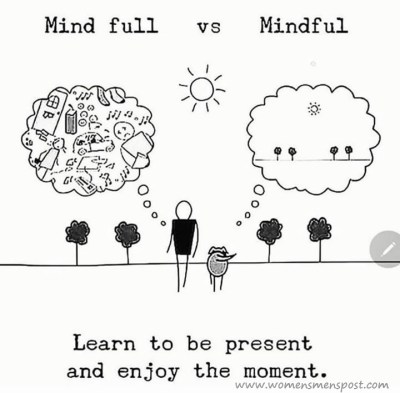
Stop Checking Your Phone And Start Using It With Intention….

A couple weeks ago, I recognized I had fallen into a dangerous loop and that my phone use —especially the time spent checking email and social media feeds — was out of hand.

So I did something about it.

I didn’t take a “digital detox” and completely abandon social media for a brief period of time because that feels more like a temporary treatment than an actual solution.

I might have felt better for a couple days, but once I returned from my detox I assume everything else would have gone back to “normal” — and normal wasn’t working for me.

Instead, I set out to change my phone habits and create a simple set of rules to limit the negative (and amplify the positive) impacts of when and how I use my phone.

What I came up with was a set of guidelines to ensure I used my phone with more intention.

These 10 rules turned out to be relatively easy to follow and made a huge difference in how often I check my phone, what I get out of it, and how I feel about it.

1. I stopped checking my phone in my car.

I never really checked my phone while driving because that’s super dangerous (and you should definitely stop that whether you try out these rules or not), but with this rule I also outlawed checking it at stoplights, in heavy traffic, or any time I was in my car.

By implementing this rule I discovered how often I actually was checking my phone in the car previously, how unnecessary it was, and how it actually made things like sitting in traffic more frustrating than they otherwise might be.

2. I stopped checking my phone during TV commercials.

I hate commercials as much as the next guy and sometimes social media seems like it was solely invented to fill up those two minute interruptions — no wonder I checked my phone at every TV timeout.

It may seem harmless to check our phone during a commercial, but I realized that’s not the case.

Because when I picked up my phone during a commercial, I rarely put it back down when the show came back on —it captured my attention and drew it away from what I actually wanted to watch.

To help me stick with this rule, I implemented another one…

3. I kept my phone across the room when I wasn’t using it.

A funny thing happened when I sat down to watch TV (or do anything) and knew I wasn’t going to use my phone during that time —I realized I didn’t even need to have my phone near me.

When I watch TV now, I keep my phone on a table across the room so I’m never tempted to pick it up. Turns out the only thing stronger than the allure of social networks is the allure of not getting up off the couch.

The further my phone is from me, the less likely I am to randomly check it. This rule helps make following the other rules easier.

Another rule that helps with that is…

4. I turned off all notifications.

This one was easy for me because it’s a rule I adopted a long time ago and love.

I turn off all notifications on my phone — there are no dings when somebody likes my Facebook post or sends me an email.

Notifications are unnecessary and they’re poison. If we enable them, we are asking our phones to interrupt us. Don’t do it.

Continue reading “Stop Checking Your Phone And Start Using It With Intention….”

A Simple Breathing Technique Found to help Anxiety, Depression

We’re constantly breathing, but what happens when we lock into some kind of pattern and consciously think about our pace of breath? For some people it’s kind of disturbing to be too self conscious of bodily processes like this: thinking about how fast you’re breathing might become an obsessive type of thing.

But if one can not think about it too much, and just generally strive to take deeper breaths and promote activities in their life that improve their breathing, this might be a good thing to look into.

One genre of “breathwork” as some call it is known as Holotropic Breathing, as reported by this article. Wim Hof, someone known as the Iceman helped popularize it.

Read MUCH More Here: simple-breathing-technique-found-to-help-anxiety-depression/

A chance for social bonding with a Camp Fire Chat…

The evolution of fire may have had major social impacts, as well as transforming our diet, according to new research.

Research among the Bushmen of the Kalahari has found sitting around a campfire at night enables conversations, storytelling, and social bonding that rarely happens during daylight.

Study author Dr Polly Wiessner, professor of anthropology at the University of Utah , analysed the content of 174 recorded or documented day and nighttime conversations among the Bushmen, as well as 68 other translated texts.

“I found this really fascinating difference between conversations by firelight and conversations in the day,” says Wiessner, whose research is published this week in Proceedings of the National Academy of Sciences.

While daytime talk tended to focus on economic matters and gossip, at night around the campfire, the conversation shifted away from the day-to-day tensions and towards singing, dancing, religious ceremonies and storytelling, and chat about common acquaintances.

“The day is harsh, you see the realities, you see the facial expressions, there’s work to be done, and there’s social regulation, and at night people kind of mellow out,” Wiessner says.

While evolutionary study of the impact of fire has long focused on the physiological changes associated with cooking of food, Wiessner was more interested in its social impact.

“The day is productive time for hunting and gathering and the firelight changed our circadian rhythm, so we stayed awake much longer and it gave a whole new time and space, and it was a time when no work could be done,” she says.

“I think it had an impact on our cognitive evolution; the stories are told in wonderful language, perhaps increasing linguistic skills and the imagination . . . when you’re out in the dark by a fire, so many of the stimuli are shut out and your imagination then takes off.”

The conversations also seem to serve an important social function, with discussion of far-flung acquaintances both alive and dead, that can serve to reinforce that broader social network, says Wiessner.

“A bushman with widespread networks, they see this as their broader community but actually these aren’t contiguous in space and sometimes even include people you don’t know very well.”

Impact of artificial light

The development of artificial lighting may have pushed the campfire out of our lives, but Wiessner says we still sometimes try to recreate that atmosphere.

“Even in our society, we love our fireplaces, in our restaurants we have candlelight, we often do a lot to change our environment to bring about the mood that stimulates intimacy, bonding, and imagination.”

However the development of artificial lighting and computers also means that those night-time hours when, in the past we would have been engaged in social bonding, we now often see those hours as an extension of daylight work time.

“For many people now artificial light has turned what were social hours into really productive hours,” says Wiessner.

“We sit there at the computer, we write, we feel we can continue to get work done, and we don’t get the social work done, we don’t spend nearly as much time with people, so the question is, when artificial light turns social time into productive time, what happens?”

Source: http://www.abc.net.au

Baking Soda Shampoo: It Will Make Your Hair Grow Faster Than Ever….

Due to its multiple healing properties, baking soda has a wide range of uses, for cleaning, cooking, and for treating various medical conditions.

Yet, it seems that we learn a new use of this versatile ingredient every single day.
This incredibly beneficial substance enhances the quality of your hair and eliminates the residue of shampoo and conditioners, providing a long-lasting shine of the hair. You can use it instead of your regular shampoo and enjoy its amazing effects.

If you are a fan of DIY remedies and want to avoid the harsh effects of commercial products which are loaded with chemicals, we will show you a way to prepare your own natural shampoo which will provide incredible results.
You may find it awkward to use this shampoo at the beginning, as it does not make foam as other shampoos, but you will get used to it over time, and its effects will definitely make you choose it over commercial hair products.

This is what to do:
In a small squeeze bottle, mix baking soda and water in a ratio 1:3.

Adjust the quantity according to the length of your hair, so if you have a long hair, mix 3 tablespoons of baking soda with 9 tablespoon of water.

Then, you can apply it on dry or wet hair, from the roots to the hair ends, and leave it to act for 1-3 minutes. Then, rinse it off with warm water.

Read More: http://dailyorganicrecipes.com/baking-soda-shampoo